.jpeg)
Awakening its residents from their slumber, sunrays go through the triple arches of a traditional Lebanese house to bask it in the warm summer light. As the day starts, the inhabitants initiate their morning routine. With the timeless songs of Fairuz playing in the background, they gather around a freshly prepared cup of Lebanese coffee whose aroma mingles with the sweet scent of kaak. Outside, beneath the arches, nature awakens and the courtyard comes to life. The garden blooms and the genial scent of jasmine and lemon trees spreads around. As the day progresses, children play, laugh and run, while conversations run late into the night. While life unfolds, the arches don’t stand just as a decorative feature, but as a silent witness to precious memories, the guardian of a rich culture and the custodian of a unique identity.
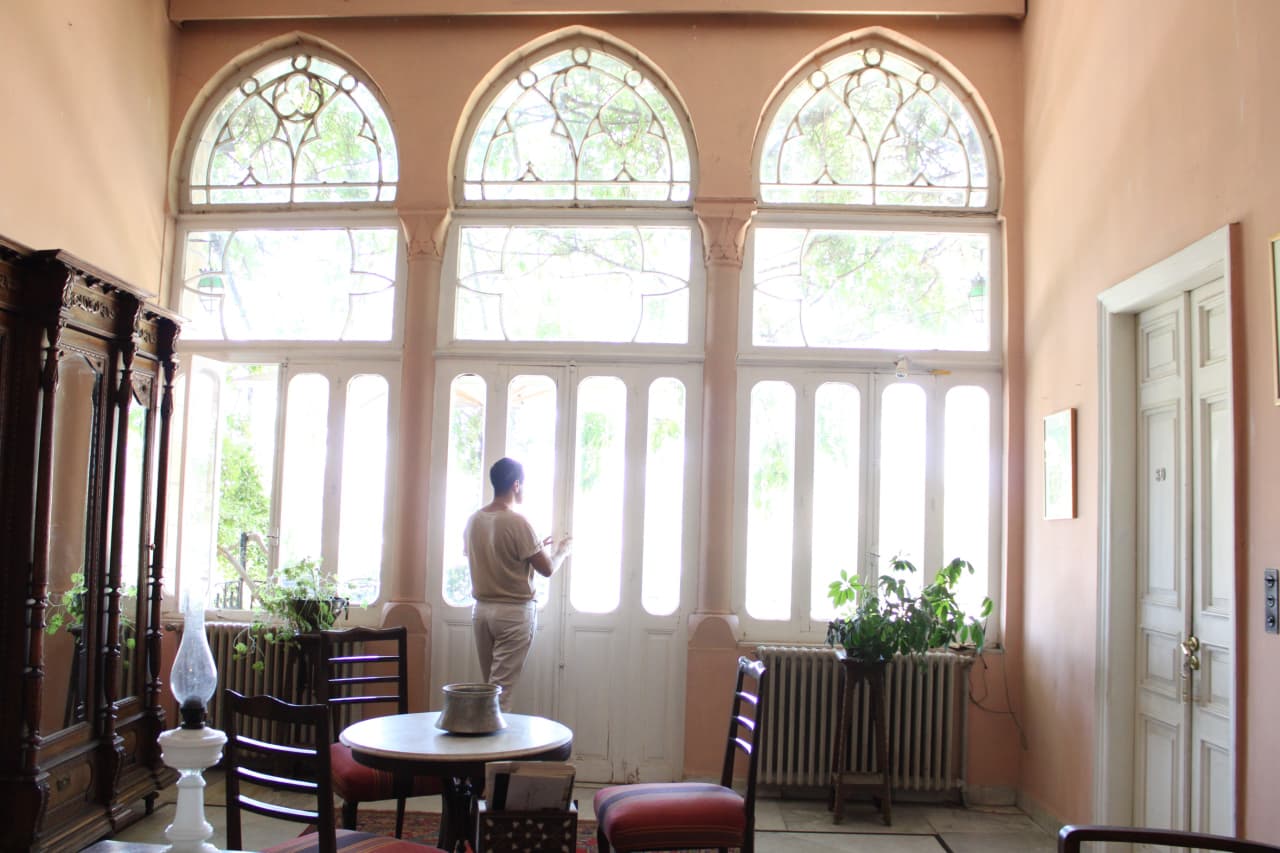
Overlooking a majestic valley or a sublime sea view from the heights of an elevated mountain, dominating the top of suburban hills, or standing out in the congested urban skylines, triple arches are an unmistakable feature of traditional Lebanese architecture. Also known as the trifora, the ornate edifices like houses, palaces and churches. Often accompanied by arcades and colonnades, this structure creates a buffer zone, a space separating the main living space from the exterior courtyards. Smart and elegant, they channel natural sunlight towards the different rooms and interior spaces, allowing seamless old-fashioned ventilation and luminosity. An ingenious feat of human architecture with a fascinating history.
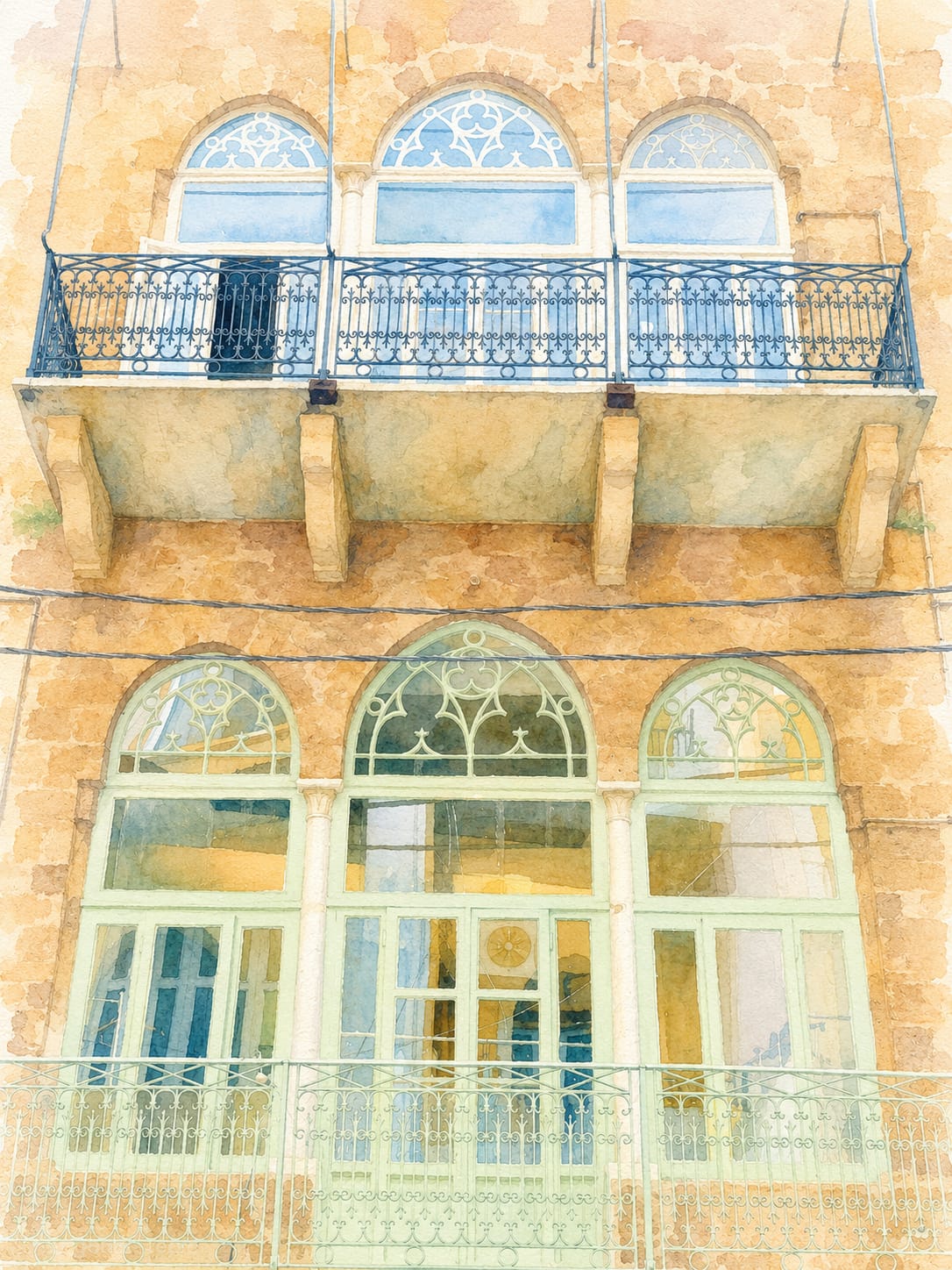
As it is often the case, there are varying accounts regarding their earliest recorded appearance in the Land of the Cedars. While some historians credit Emir Fakhreddin II with introducing them in the 1600s, others suggest a continuity with Syriac and Byzantine architectural traditions. In addition to their beautifying function, triple arches are believed to hold deeper significance. For instance, early Maronite sources associate the three openings with asymbolic representation of the Holy Trinity. Rich in symbolism, they reflect theological concepts of unity and multiplicity, and act as proverbial gate between the material and metaphysical. Moreover, it is not uncommon to find carved lilies on this type of structure. Long associated with purity and grace in Christian iconography, this motif adds another layer of symbolism to this triadic form.
Given Lebanon’s history, Venetian and Ottoman styles greatly shaped the local architectural landscape for centuries, without jeopardizing its distinctive essence. Driven by the prosperity of Sidon and Beirut as regional trade hubs in the 18th and 19th centuries respectively, local architects got more and more exposed to European sensitivities. As such the “Beiruti house”, a suburban family house that predominantly featured tripled arches, became the symbol of the early stages of the western-influenced urbanization of coastal Lebanon. During this transitional period, local architects managed to combine ancestral know-how with technical innovations, hence forging a distinctive visual identity mixing tradition and modernity, pluralism and conformism.
As the country is facing uncertain times, so is its architectural heritage. Dealing with a fragile security situation and a protracted financial crisis, the authorities have limited ability to offer concrete protection. Furthermore, the weak enforcement of preservation laws pre-2019 played a role in losing several traditional houses to real estate projects in the Greater Beirut area. While some historic buildings were converted to heritage sites or museums, many were destroyed, demolished or altered. Conservation efforts should go beyond saving stone facades. It should be presented as a measure to safeguard the country’s past, to showcase the Lebanon of old as underpinned by its family life, social interactions and design language. Saving triple arches may not be on the top of the agenda at the moment. Quite understandable. Yet, preservation attempts in these challenging times amount to a symbolic act of resistance, a meaningful commitment towards future generations so they can know their history, and more importantly, develop a sense of place and identity.