


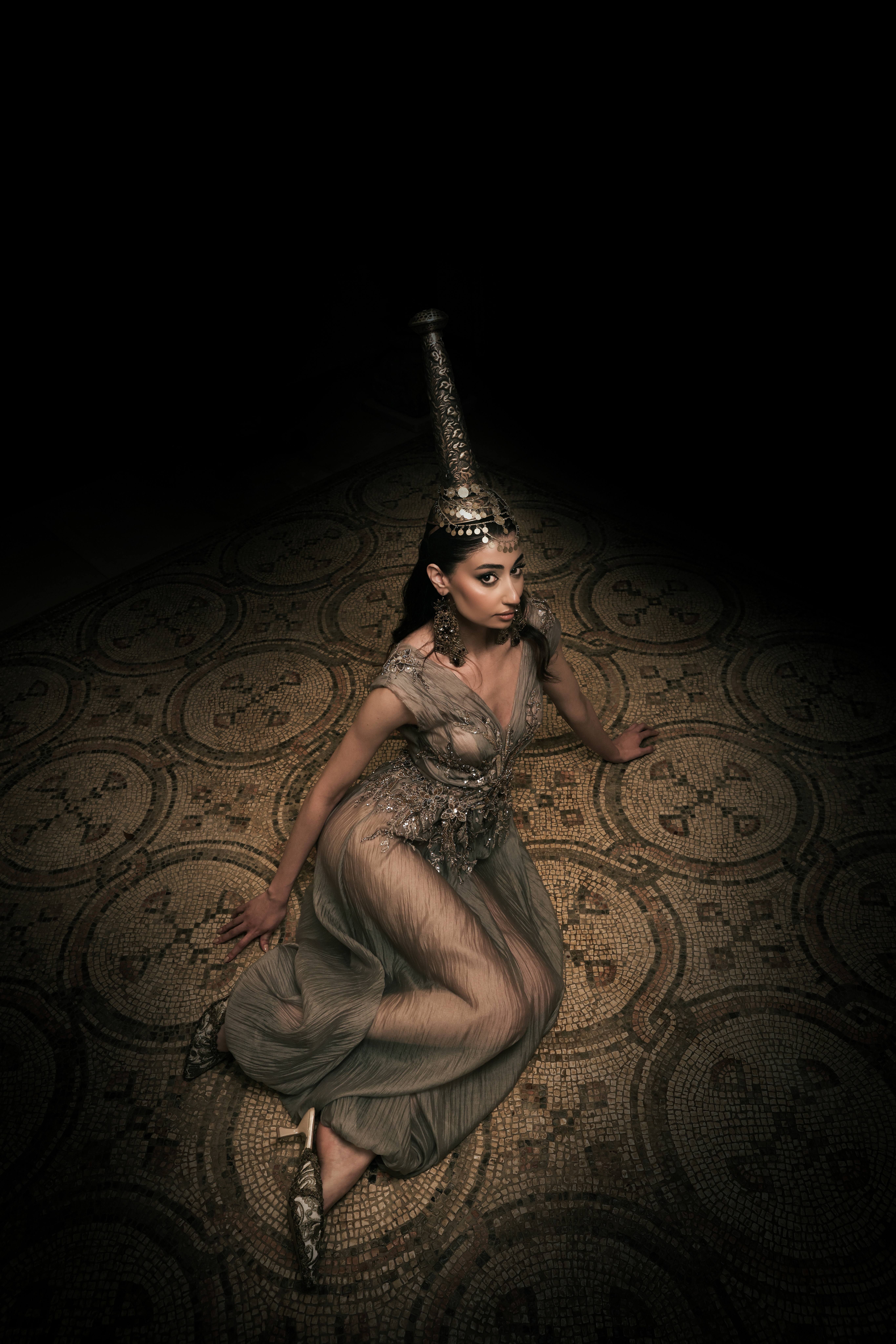
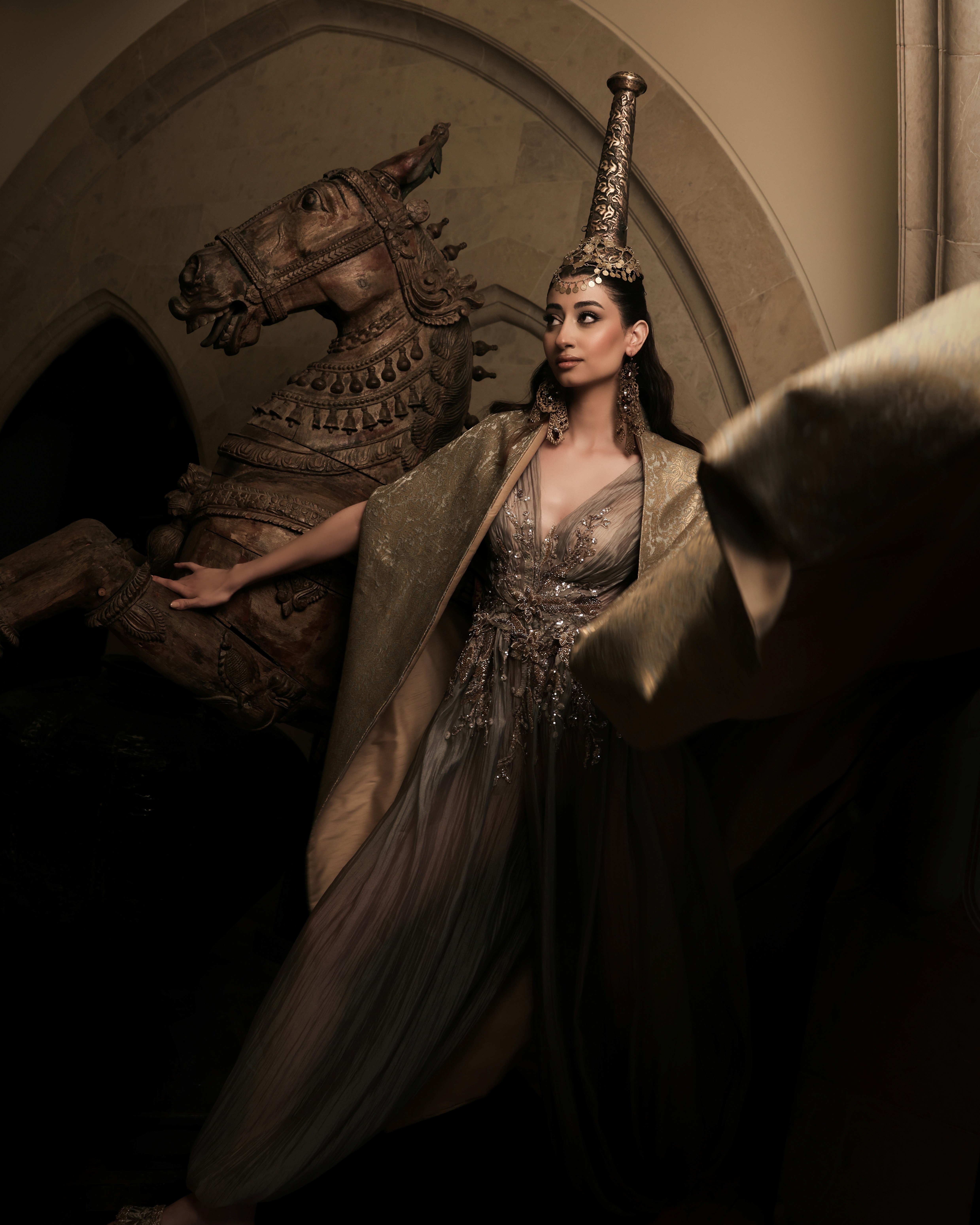
For the May issue of FOLKLOR, heritage unfolds like a forgotten legend beneath the stone arches of a Levantine palace. Wandering through shadowed corridors and fragrant gardens where jasmine climbs ancient walls, the princess emerges suspended between myth and memory as a vision drawn from nineteenth century Lebanon, shaped by mountain nobility, Ottoman elegance, and the enduring poetry of the Levant.
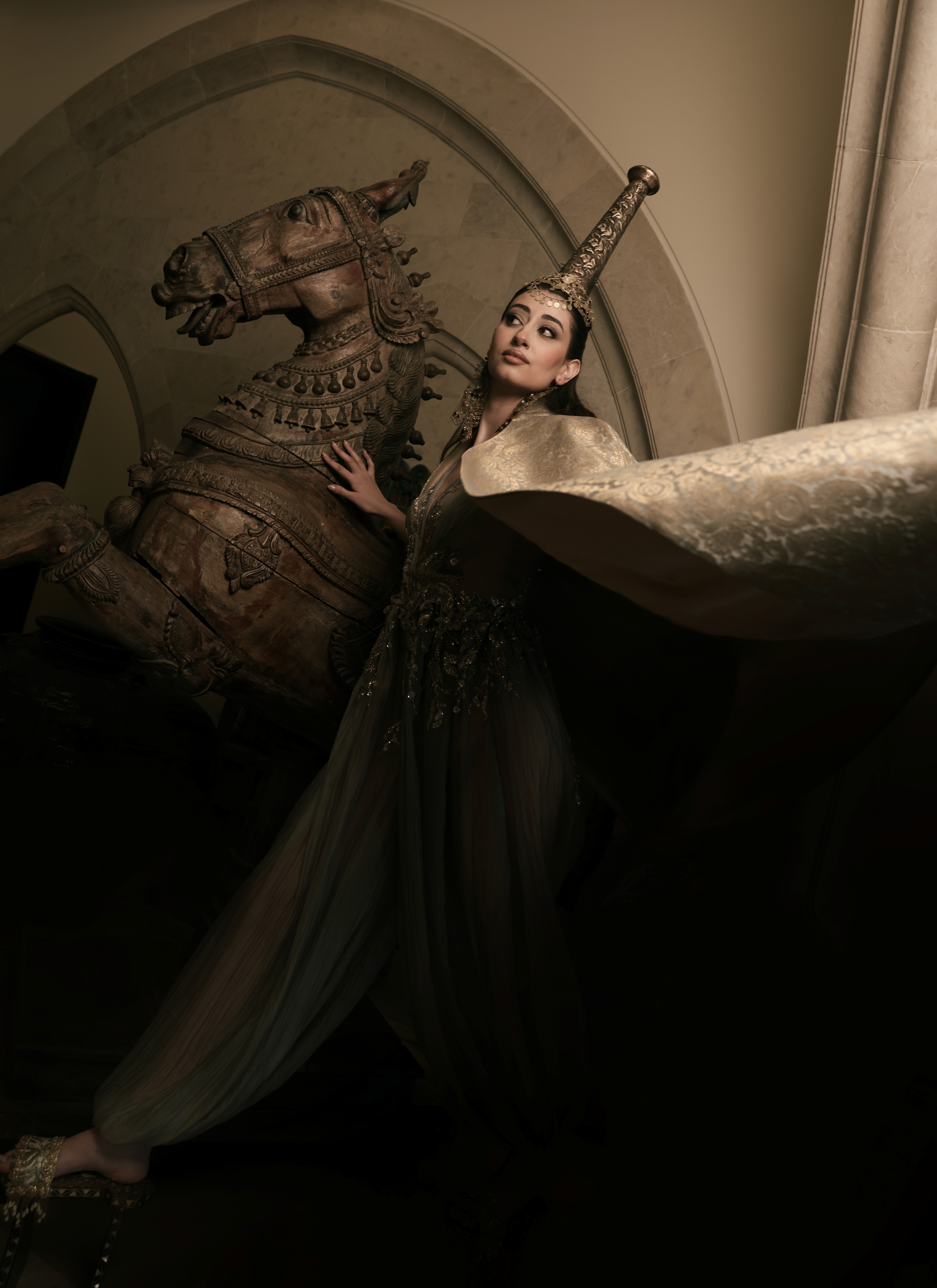
At the center of the story stands the tantour. Rising high above the head in silver or gold, it once crowned Lebanese women with unmistakable presence and dignity. Travelers described it as “the horn of a unicorn,” an extraordinary silhouette that transformed its wearer into something almost mythical. More than adornment, the tantour announced lineage, femininity, and social standing before a single word was spoken. A woman lived in it, crossed mountains in it, and carried the weight of identity beneath its towering form.
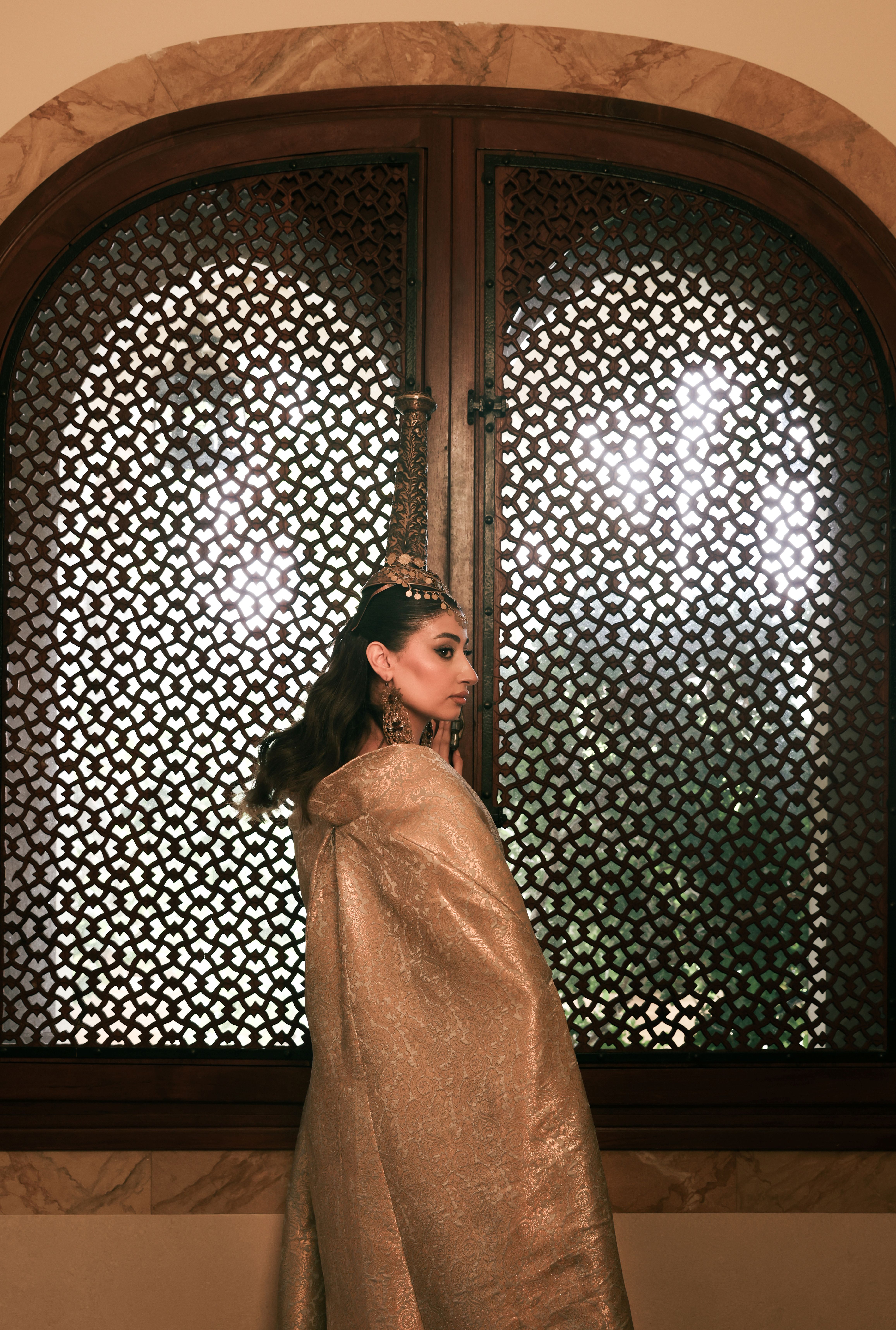
Though the tantour disappeared from daily life by the late nineteenth century, its image never vanished from the Lebanese imagination. In this story, it returns through couture and craftsmanship, not as reconstruction, but as remembrance.
The garments revive the artistry of traditional Lebanese dress through flowing sherwal trousers, sculpted bodices, and sweeping capes embroidered with intricate foliage motifs inspired by heirloom beadwork. Metallic threads shimmer across rich raw silk and taffeta like traces of old gold, echoing the ornate craftsmanship once reserved for aristocratic women of Beirut, Mount Lebanon, and the coastal courts. Every embroidered vine, every coin detail, every glint of sequins recalls the hands of Lebanese artisans who transformed garments into living heirlooms.
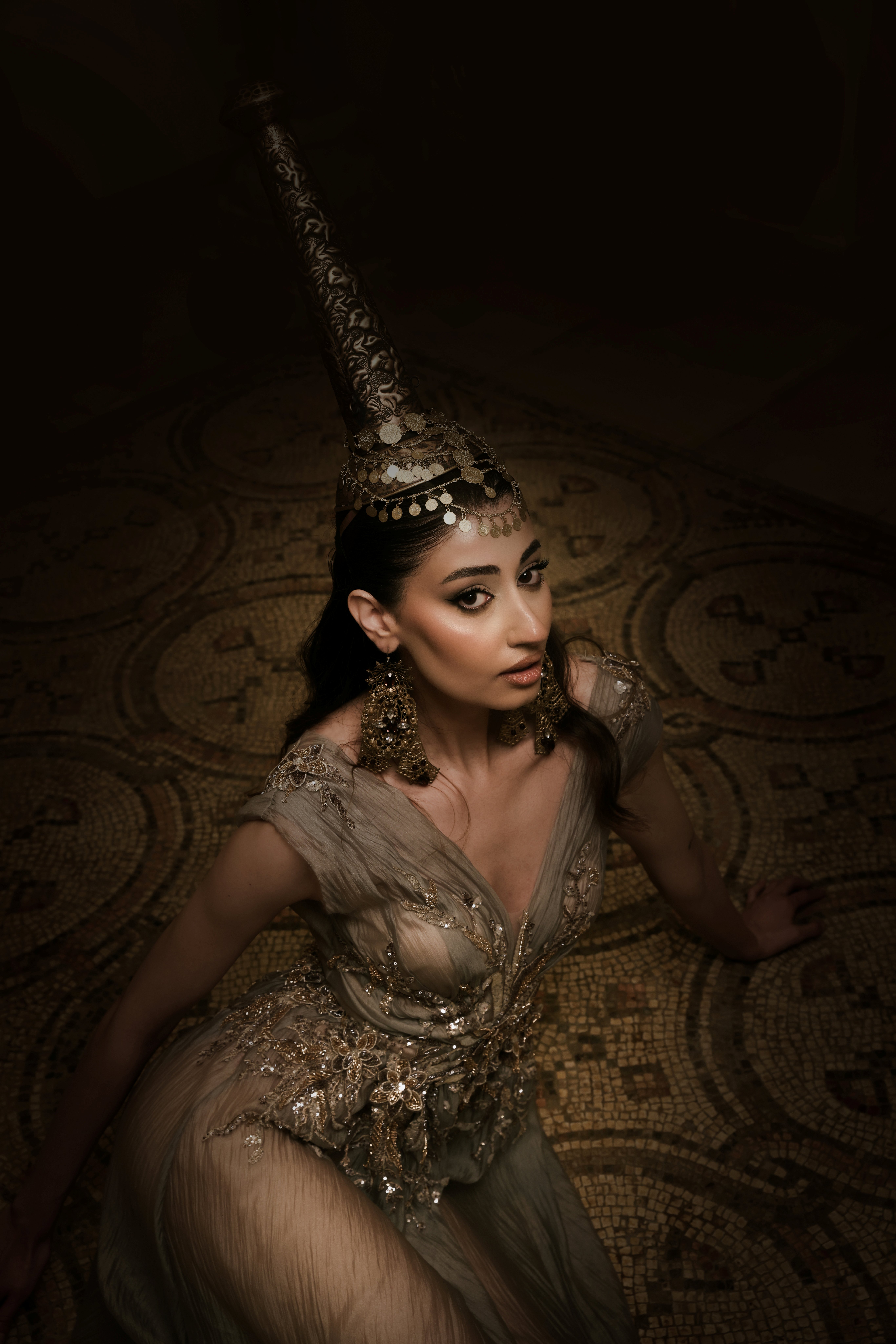
Soft gilded tones mirror the romance of the Levant itself: warm stone palaces, mosaic floors worn smooth by generations, cedar shadows stretching across mountain terraces, and the final golden light before dusk settles over Beirut. Within these interiors, fashion becomes preservation.
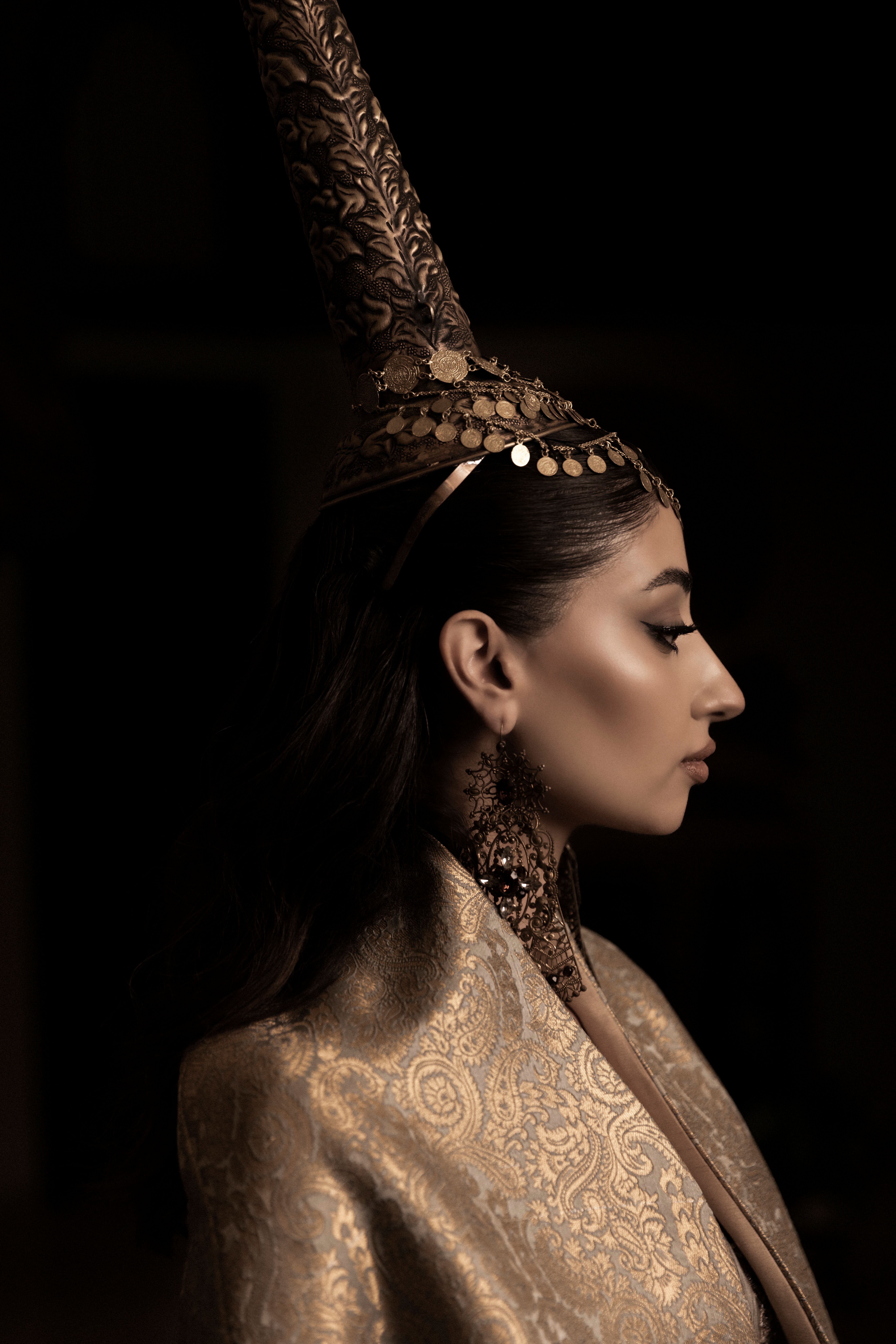
This is not simply a portrait of costume or nostalgia. It is the awakening of a forgotten Lebanese princess moving through her ancestral home with quiet authority and grace. Between history and fantasy, heritage breathes again — crowned in tantour.
.webp)
.webp)
