

.webp)
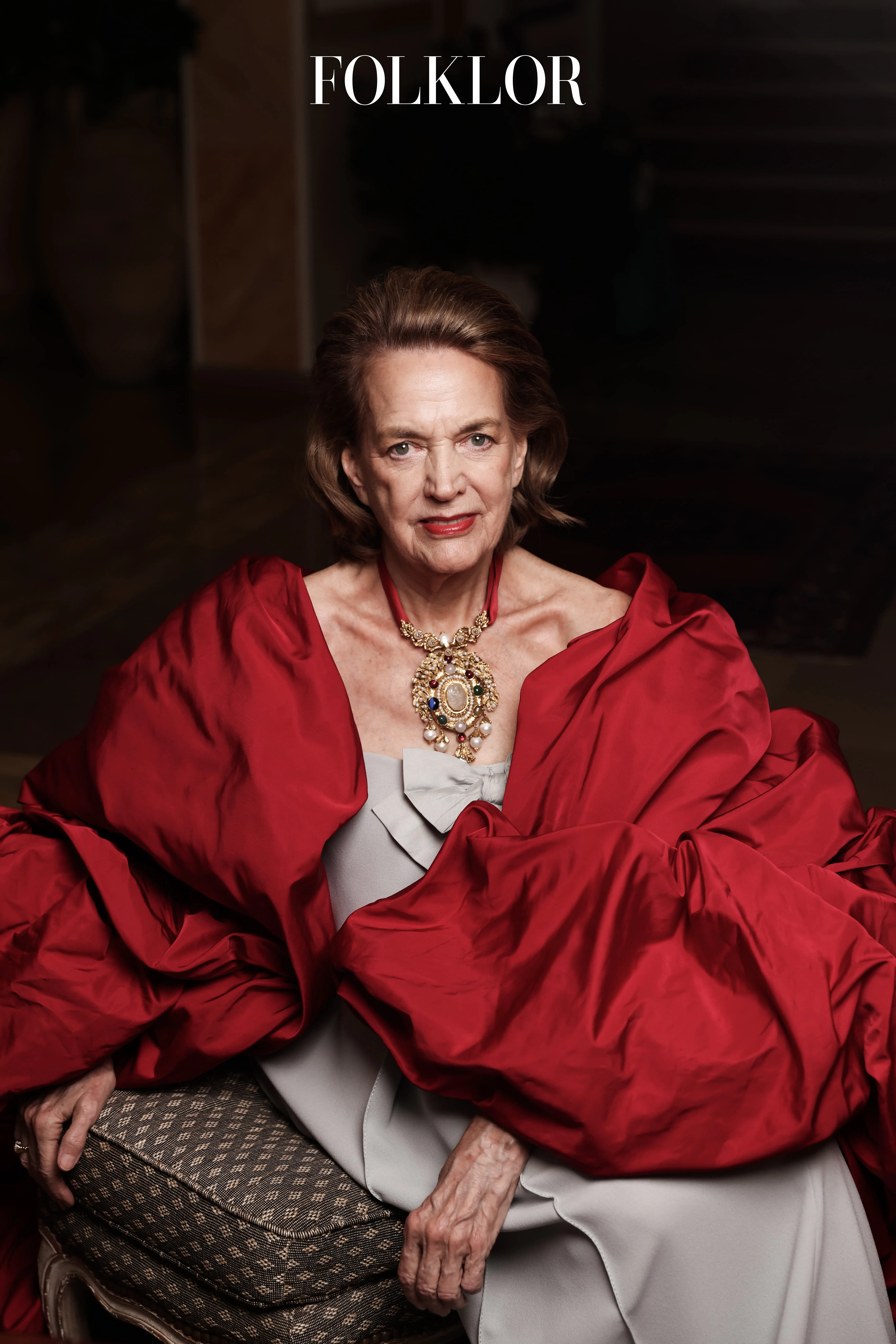
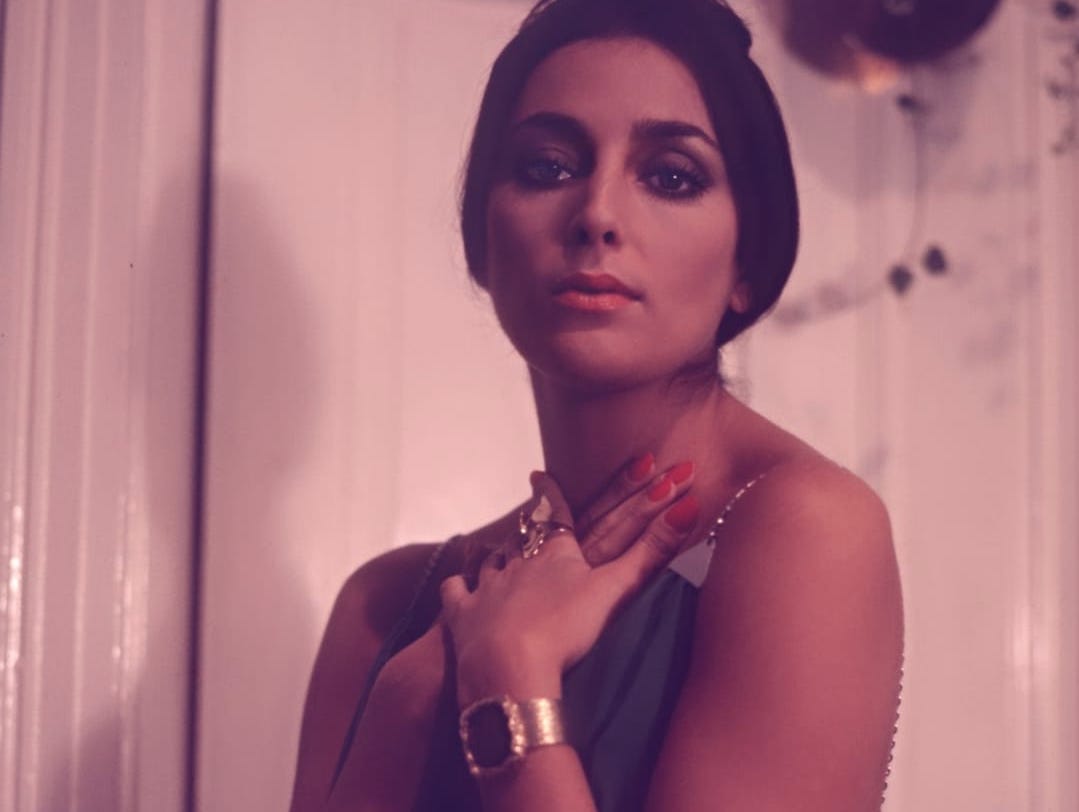
Alice Eddé is a cultural custodian of Byblos, a woman whose life and work are inseparable from the land she chose to call home. She is married to Roger Eddé, a Lebanese thinker and builder of ideas as much as places. Through projects such as EddéSands and the revival of Byblos’ old souks, Roger has long believed that heritage must be lived, not preserved behind glass. Together, they share a conviction that culture survives only when it remains part of daily life.
The road to the village of Eddé winds quietly through Mount Lebanon. Stone houses, narrow streets, terraces pressed into the hillside. In Lebanon, surnames are rarely accidental. They are geographic markers. To carry the name of a village is to belong to it across centuries. Here, the name Eddé is not symbolic. It is ancestral.
From the outside, Alice’s home gives nothing away. Hidden behind greenery and gates, it reveals itself only once entered. Inside, it unfolds slowly, shaped with care rather than urgency. Stone, wood, carpets, plants. Built near the archaeological church of Saint George, once a Roman temple, the house draws from convent traditions and the spiritual roots of the Maronite presence in the region. It took fifteen years to complete, with stones cut specifically for the project and gardens left to grow into themselves.
Before we speak, Alice brings tea. Lemongrass, linden, rose petals, chamomile, all gathered from her garden. Even the honey comes from bees raised on the land. Later, she serves freshly squeezed grapefruit juice, sharp and bright. Hospitality here feels instinctive. Nothing is staged.
As Alice walks me through the house, history surfaces quietly. Artworks appear naturally from room to room. A gigantic Trojan horse stands in the entrance hall, not as ornament, but as reminder. This is a home that carries memory without displaying it loudly.
Despite its scale, the house feels deeply human. What stayed with me most was a small pergola on the ground floor, where Alice sits in the mornings with her tea. Surrounded by plants and light, time seems to slow. Sitting there, one briefly feels removed from Lebanon, only to realize moments later that this is Lebanon at its most honest. Rooted, generous, alive.
This is where Alice Eddé has chosen to build her life. Not in abstraction, but in place. And it is from here that her love for Byblos, for culture, and for Lebanon quietly radiates.
1. What first brought you to Lebanon, and how did it inspire your life and work here?
In 1973, I embarked on what I called a “Mediterranean Tour,” which both began and ended in Lebanon. At the time, I was working with Time Life Books and stayed with my close friend Carla Hunt, who was working with National Geographic. Her husband, Richard Hunt, was a correspondent with ABC News. They introduced me to their lawyer, Roger Eddé, as someone I could trust in all circumstances. That was it. Everything began there.
2. How has your American background shaped your creativity, and what has living in Lebanon taught you about culture and design?
When I was 13 my father, an American army officer, moved from Washington DC to Germany to shield us from the Elvis Craze that was influencing America's youth at the time!
My father, Col. John M. Bradley, was based in Taiwan at the time, supporting General Chiang Kai-shek.
This move to Germany helped me to be open to European cultural internationalism which I discovered between the Sacré Coeur school in Germany, and the university language studies in Zurich, Bordeaux and Venice.
Lebanon was for me the meeting place of East with West, of Egyptian, Phoenician and Greco-Roman cultures. A highly privileged and fascinating house of many civilizations and religions, especially the three Abrahamic religions.
I rapidly learned with Roger everything about the Maronite Nation and Islam, which were founded in the 7th century by the first Maronite Patriarch Mar Youhana Maroun and Mohammad the Messenger.
3. Your partnership with Roger blends two worlds. What has been the most meaningful lesson in love and life together?
From Day 1 Roger and I lived a Partnership in Love through strength, wisdom and emotional sensibility to natural beauty, as well as its spiritual dimension.
Loving the unlimited aesthetic shades of human creativity, talent & genius has been our constant Love Affair for a half century of our marriage!
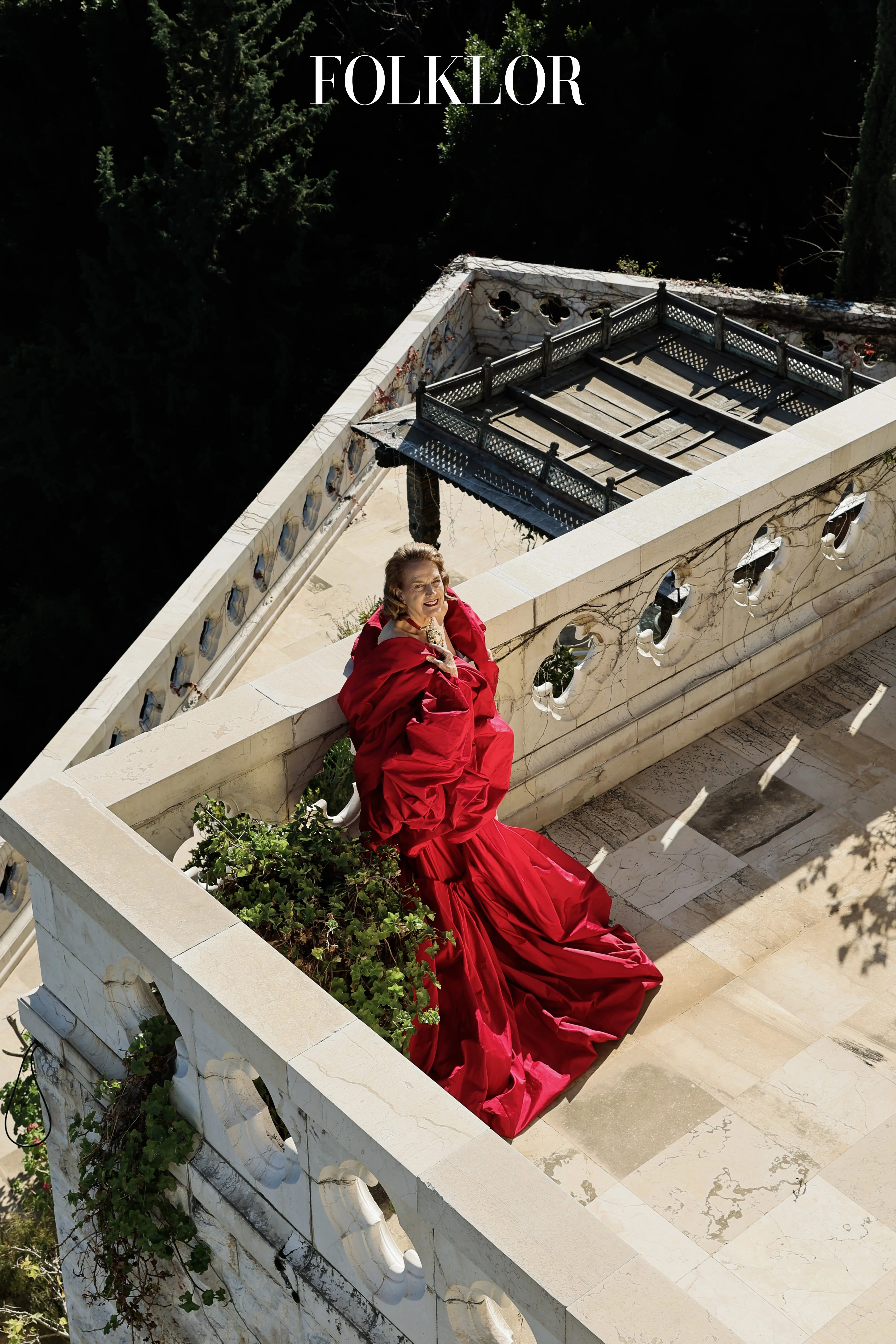
4. For Valentine’s, how do you define love; not just romantically, but in life, work, and your connection to Lebanon and perhaps Roger’s village Edde?
When I met Roger we communicated in French, as Roger was French educated and had not studied English.
The first sentence Roger learned in the language of Shakespeare was : "It's Bigger than Both of Us" I had written this on a huge Valentine's poster I had painted with a huge heart and hung in our room. Roger was not familiar with Valentine's customs!
Roger was much more a passionate lover than a romantic! Slowly but surely, Roger's romanticism grew like a magnificent Cedar!
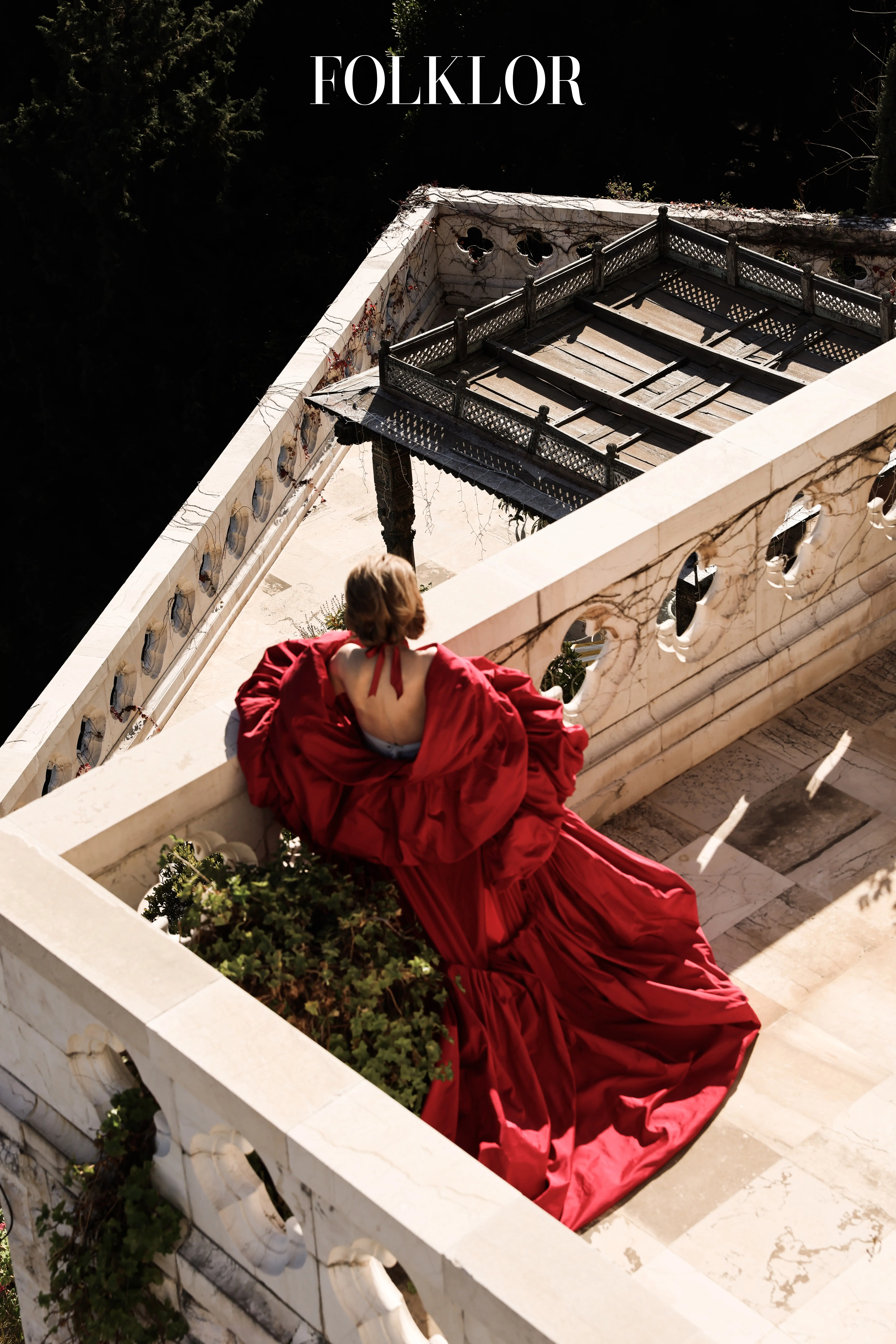
5. All your shops and projects are in Byblos. What is it about this city that captures your heart and inspires your creativity?
Byblos was magical to me even before I ever visited Lebanon. I loved it in my heart and mind before developing a physical love for it.
My connection goes beyond the Old City, extending to Eddé, Amchit, and Bilad Jbeil along the Via Appia road, which once linked Rome to Byblos, Baalbek, and Tadmor. In Eddé, I discovered the authenticity of Mount Lebanon, something I never quite felt in Beirut. I was especially drawn to its preserved Ottoman architectural spirit.
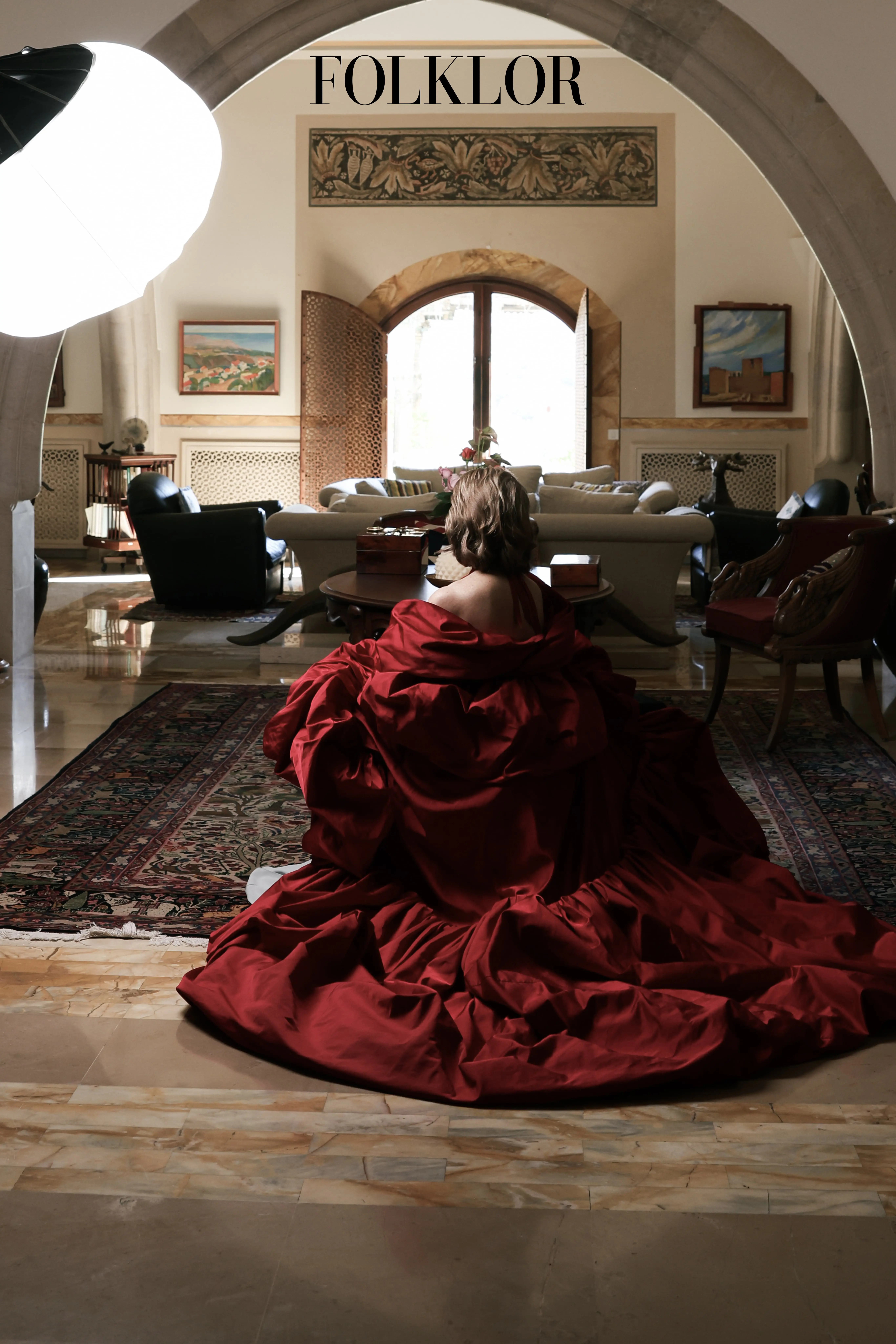
6. Your boutique Alice Edde celebrates local artisans and heritage. How meaningful is this initiative for you and what is its impact?
For me, Byblos needed its Old Souk to be rehabbed in order to attract and entertain visitors in the Old City.
My time spent in Venice taught me that the problem of Venice was that visitors should be allowed to spend time and have more affordable lodging and opportunities to shop and discover Italy's many fascinating elements visible in irresistible Venice.
The same for Byblos! It has been Roger's and my ambition to turn an archeological destination into a full-fledged destination. And so developed the idea of EddéSands that Roger decided while walking with me on top of the archaeological site near the iconic house and the amphitheater.
Roger looked at the sandy beach south of the site and said to me: "This could be our Lebanese St Tropez or Juan les Pins or Cap d'Antibes!"
7. From rural markets to artisan collaborations, why is preserving Lebanese culture important to you, and what impact do you hope to leave?
I would love to be simply remembered as having been one of the lovers of Byblos that desperately wanted to add meaning and life to its embracing old walls that hold the many perfumes of Lebanon's cultural heritage and to the métissage of its many cultures, identities and nations.

.jpeg)