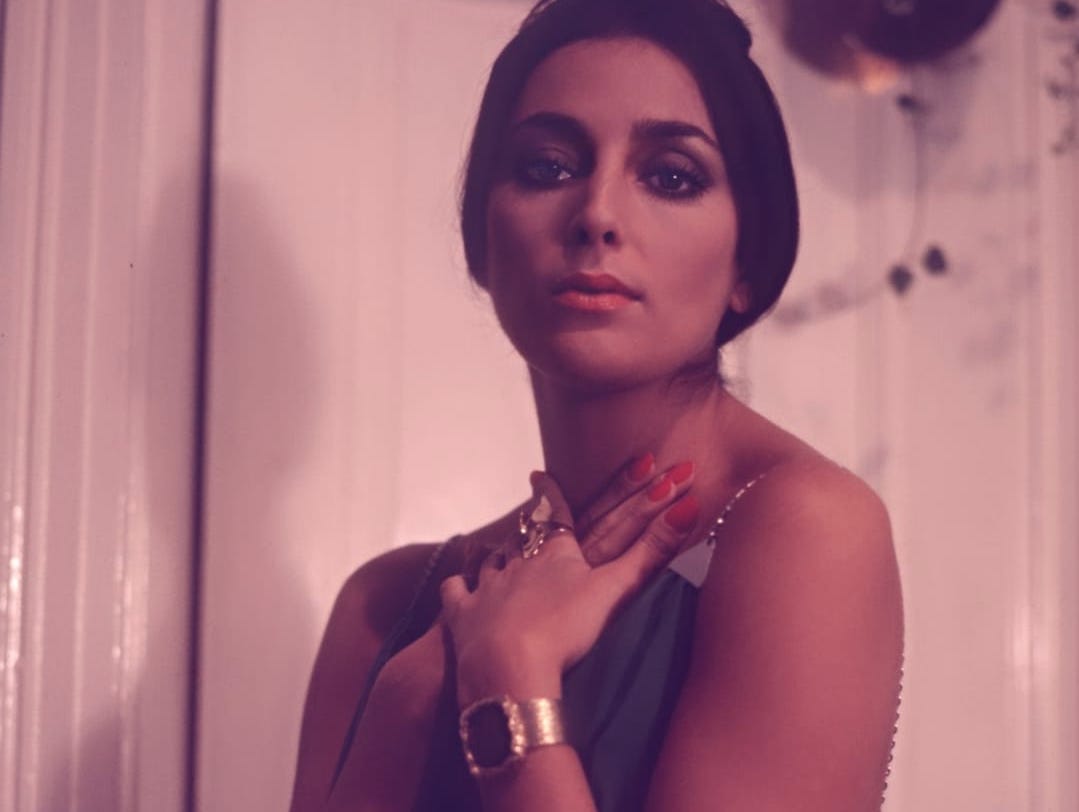


I first discovered Jihan Chehayeb during a fair in Abu Dhabi, where her work immediately drew me in with its quiet emotional depth. Delicate and resonant of heritage, her pieces felt less like objects and more like fragments of Lebanon itself ; intimate, poetic, and suspended somewhere between architecture, memory, and storytelling. Long after leaving her stand, I found myself still thinking about them.
It felt only natural to feature Jihan in this month’s issue of FOLKLOR, dedicated to heritage and the beauty of what we preserve across generations. Originally trained as an architect, she approaches design with both precision and sensitivity, transforming ancient alphabets, Levantine forms, and architectural details into contemporary objects that carry the soul of history in subtle ways. Her work does not seek to recreate the past literally, but rather to preserve its essence and allow it to continue living quietly within modern life.
What moved me most during our conversation was the tenderness with which she speaks about Lebanon. For Jihan, identity is found in the smallest details: the geometry of an old balcony, the sound of morning voices drifting through a street, the familiarity of carved stone warmed by sunlight. Through her work, these fleeting memories are transformed into something tangible and lasting.
In many ways, Jihan Chehayeb’s creations are more than objects of design. They are small vessels of memory held gently within the palms of our hands as reminders of where we come from and the stories we continue to carry forward.

1. You grew up in Lebanon during the war and later returned after years abroad.
How did that journey shape the way you see memory and identity today?
I grew up in Lebanon almost all my life and lived through all the wars and difficult periods this country endured. Yet somehow, even during the hardest times, we still created beautiful memories. That is something very Lebanese… life always insists on continuing.
I later lived in Canada for five years, and strangely, that is where my real appreciation for Lebanon began. Distance changes your vision. The smallest details suddenly become precious and nostalgic: the sound of school buses in the morning, the echoes of children in school yards, the random “Sabah el Kheir” you hear from behind balconies and fences, the smell of coffee coming from a neighbor’s home.
Abroad there is safety and a more guaranteed future, but the soul I was searching for was always here, in my Lebanon.
2. You began as an architect before moving into object design.
What made you shift from building spaces to creating objects that people can hold?
I wouldn’t really call it a shift, and it was never planned as a career move. I was simply experimenting with an object inspired by heritage and storytelling, and it unexpectedly received a lot of attention and appreciation.
I call it “mini architecture.” The process is very similar to me: research, clients, concept, proportions, detailing, and execution. The difference is that instead of creating spaces people walk into, I now create objects people can hold and live with daily. They become smaller, more intimate experiences.
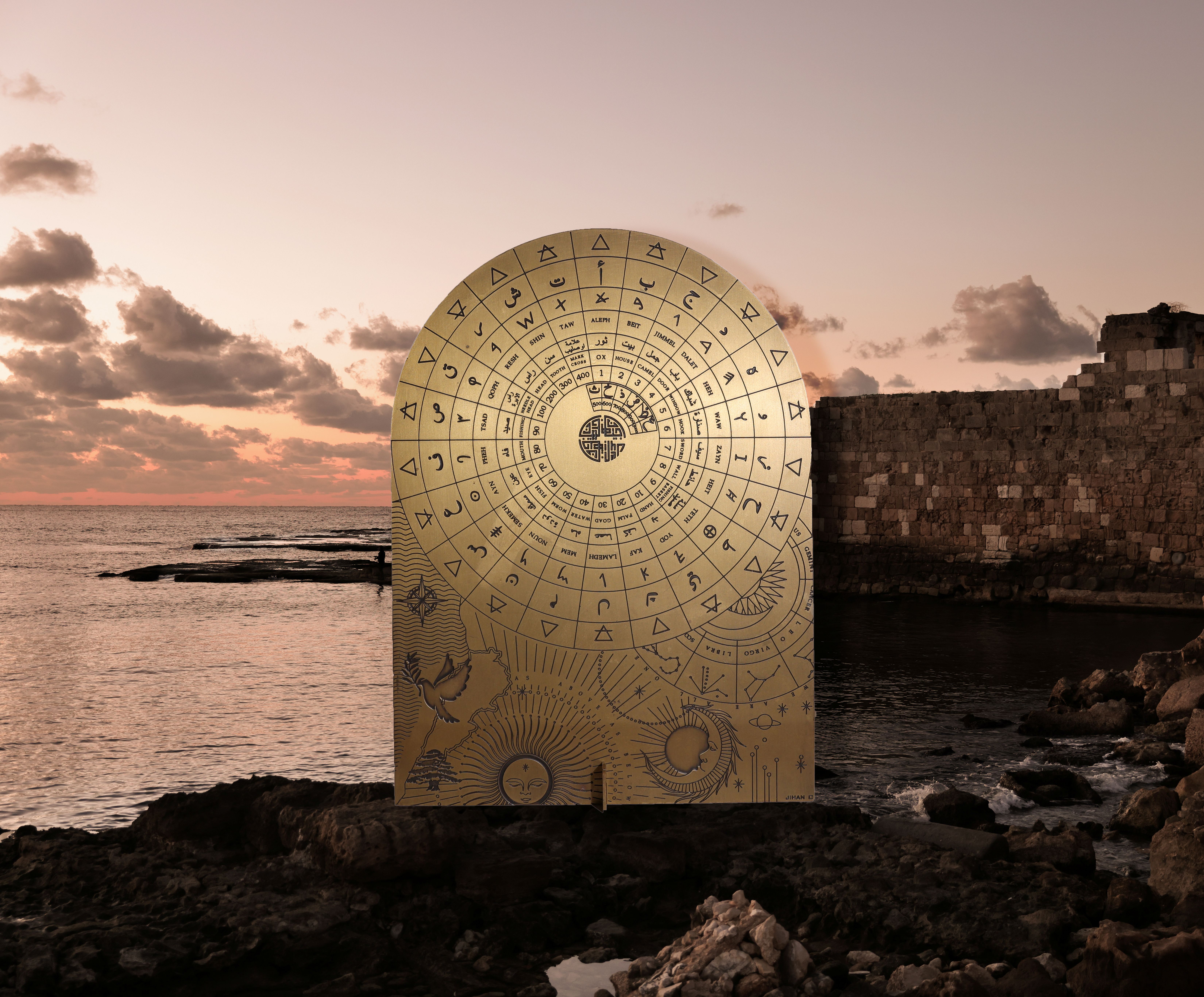
3. You explore the link between the Phoenician alphabet and modernArabic.
Are we speaking something ancient without realizing it?
Absolutely. This idea fascinated me deeply and became part of an on going research journey for me.
What we call modern languages today did not appear separately or suddenly. They evolved through civilizations, carrying traces of one another across time. When we look closely at the Phoenician alphabet and follow its transformation through Greek, Latin, and Arabic, we begin to realize that many of the systems we use today still carry the same foundations.
So in a way, yes… we are speaking something ancient without fully realizing it. Not because the languages remained unchanged, but because the roots, structures, sounds, and human need to communicate continued evolving across generations.
What interests me most is not proving which civilization was older or greater,but understanding how connected we really are beneath all our differences.
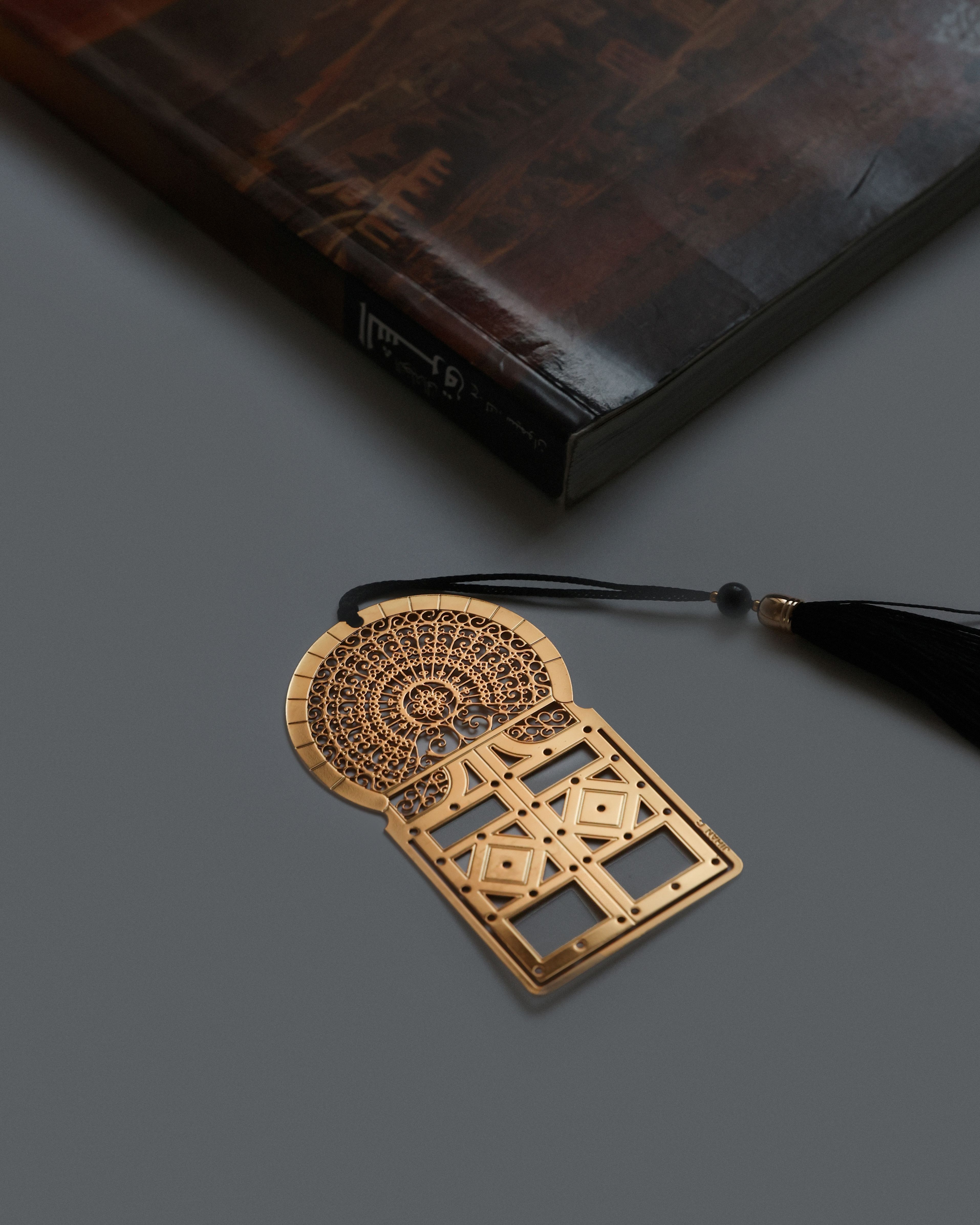
4. Why was it important for you to express this research through a bookmark rather than another object?
I started with a bookmark because it naturally gathered many things I love into one object: reading, Lebanese architecture, storytelling, and heritage.
I also realized how much a simple bookmark can encourage people to read again, or read even more for those who already enjoy it. It quietly becomes part of someone’s personal journey through books and ideas.
I believe reading, exposure, and education help us see the beauty within different cultures. They create understanding, build bridges between people, and soften fear and separation.
What inspires me most is that beauty exists everywhere around us in Lebanon, in our streets, balconies, doors, stones, and everyday details. Through my work, I try to bring attention back to these elements before they disappear into familiarity.
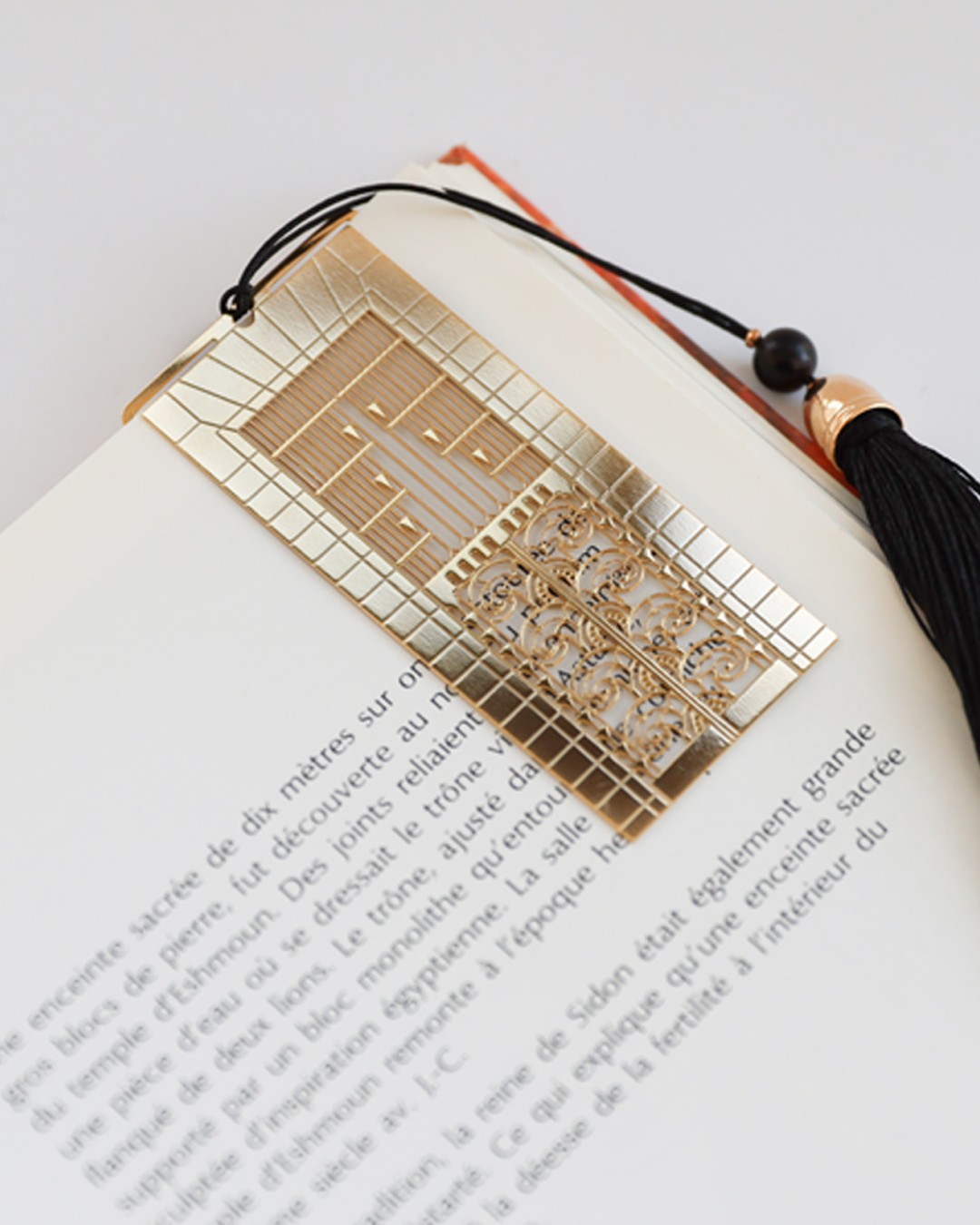
What does that in between space hold for you?
For me, that in between space is where transformation happens. It is the space between memory and modern life, between what was and what continues evolving.
I am very drawn to the idea of preserving essence while allowing forms to change. A historic door can become jewelry, an ancient letter can become a contemporary object, yet something of its soul still remains.
I think my work lives in that tension between preservation and reinterpretation, where history continues breathing quietly through everyday objects.
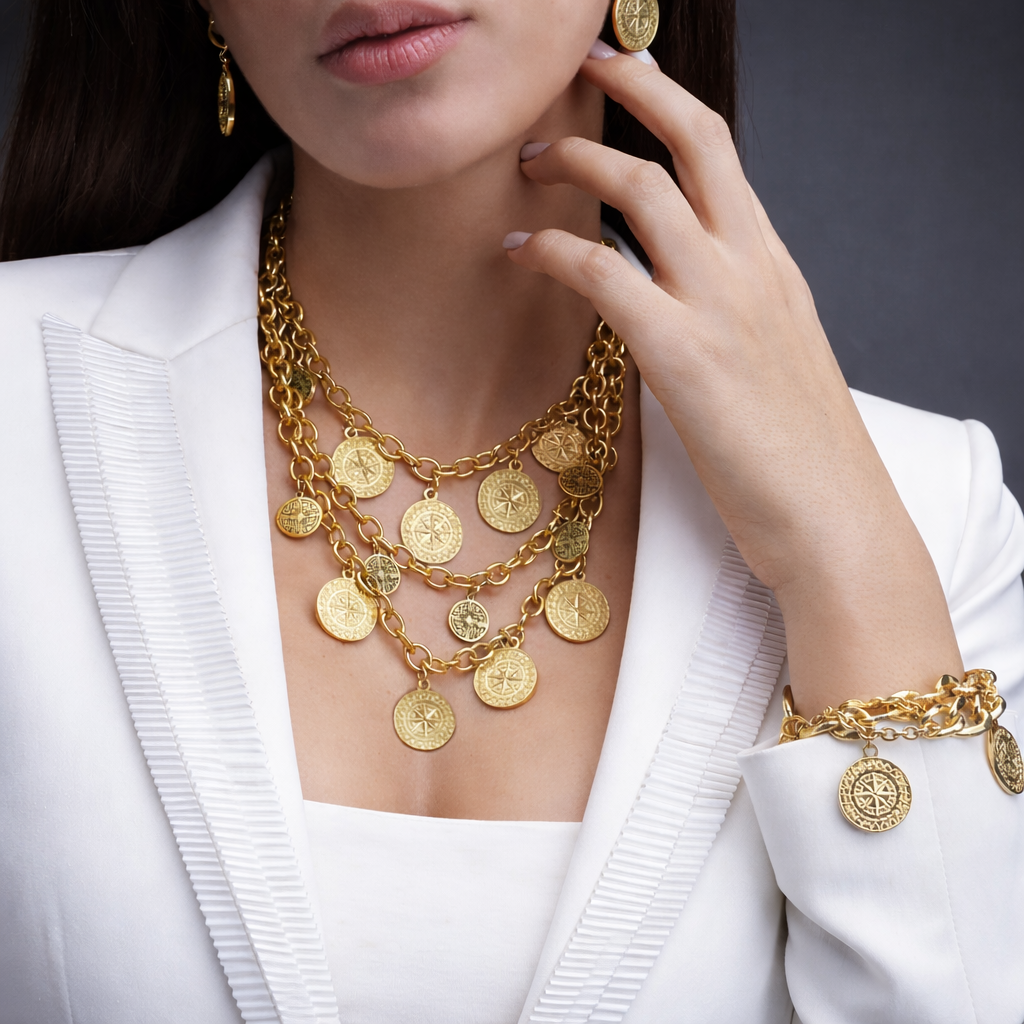
5. Your work transforms architectural doors and historic forms intosomething intimate and portable. Is this your way of allowing people to carryheritage with them?
Absolutely.
I do not think heritage should remain frozen inside museums or old buildings. I love the idea of integrating it into contemporary life in subtle and intimate ways.
They say the winner is often the one who tells the story. That is why preserving our heritage matters so much to me. When we continue telling our stories, carrying our symbols, and keeping our memories alive, we make sure that a part of us continues traveling through time.
When someone wears or holds one of my pieces, a historic form continues its journey in a new context. It becomes personal again.
Sometimes a small object can reconnect people to a place, a memory, or a feeling they did not realize they missed.
.jpg)
6. When someone holds one of your pieces, what do you hope they remember about language, identity, and where they come from?
I hope they feel emotionally connected to it before anything else. I hope they feel the energy of my love and intention behind it, almost like holding a small piece of my soul.
With all its intricate details, the piece becomes more than an object or jewelry. It becomes something personal, something to treasure.
And maybe through it, they remember that identity is not only about where we come from, but also about the memories, stories, and emotions we carry with us through time.

.webp)